The Squint book series by Francis Gurtowski
 |
Squint is a word game played with a combination of
(A) permutations of the alphabet,
(B) Scrabble's letter rates, and
(C) this book series.
Stick around while I lead up to squint's gameplay.
There are 26! permutations of the alphabet, and,
since one permutation is as likely a specimen as another,
I use ABCDEFGHIJKLMNOPQRSTUVWXYZ itself,
here, for the sake of illustration.
Catch the word "no"
spelled out in an unbroken sequence:
...NO....
Well, that was easy.
Catch the word "it"
spelled out in a broken sequence:
...I...T....
That one, maybe not so much.
My premise is that
- as the sought-after spellings lengthen and lengthen -
you have to figuratively squint your eyes harder and harder
in order to spot the latter variety of catchwords.
And by "squint" I mean
to scan the respective permutations
looking for any and all words of a given length
spelled out in broken sequences.
The following empirical data,
about the seven-letter variety of broken catchwords
embedded in permutations of the alphabet,
are the fruit of my study of a random selection
of a million such permutations.
It turns out that seven-letter catchwords (and up)
are few and far between.
I found no seven-letter catchwords at all
- neither broken ones nor unbroken ones -
in 620,589 of my 1,000,000 samples:
e.g. KTELRMVJNBYOFCXSIUQGWHZDPA.
I found but a single seven-letter catchword
in 207,734 of my 1,000,000 samples:
e.g. MJVIYUORXKWLTZNADPSBGEHFQC voltage.
I found a total of two seven-letter catchwords
in 82,687 of my 1,000,000 samples:
e.g. ZBKTGCOAVWPLQNFIJHMDYRSEUX bonfire confide.
I found a measly sixteen seven-letter-catchwords
respectively spelled out in unbroken sequences.
The unbroken species is practically nonexistent.
On the other hand,
ever longer and longer catchwords spelled out in unbroken sequences
if and when they do occur
visually practically jump right out at you:
e.g. SPQZKFJXCDUAVOWINGTEHYBRLM AVOWING
fainter jointer painter pointer scanter sponger squinty suavity swinger.
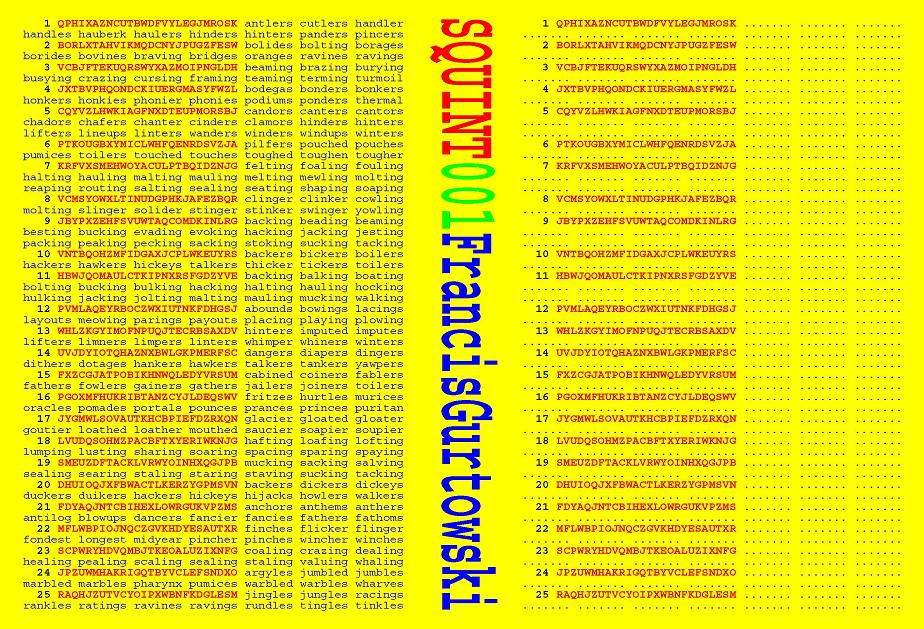
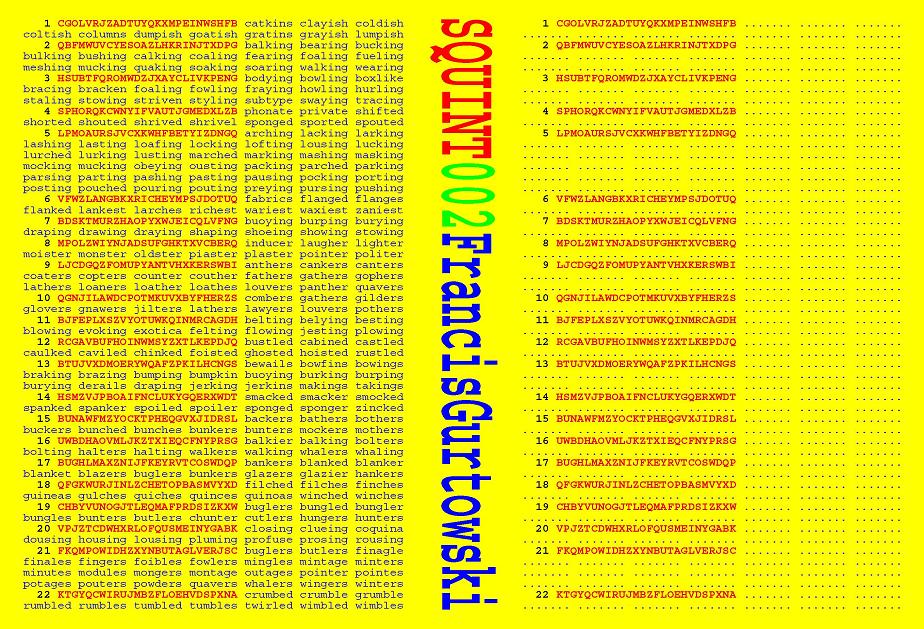
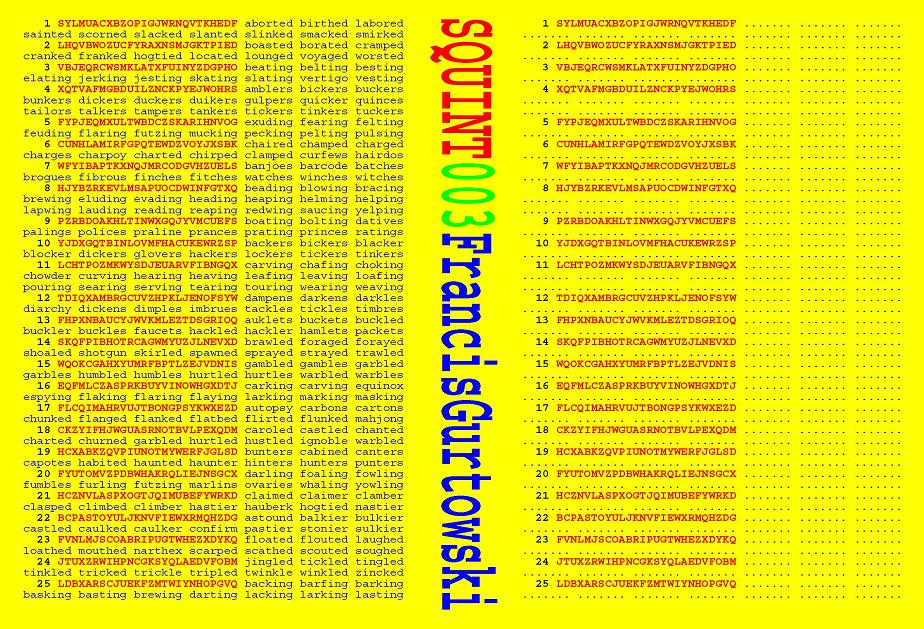
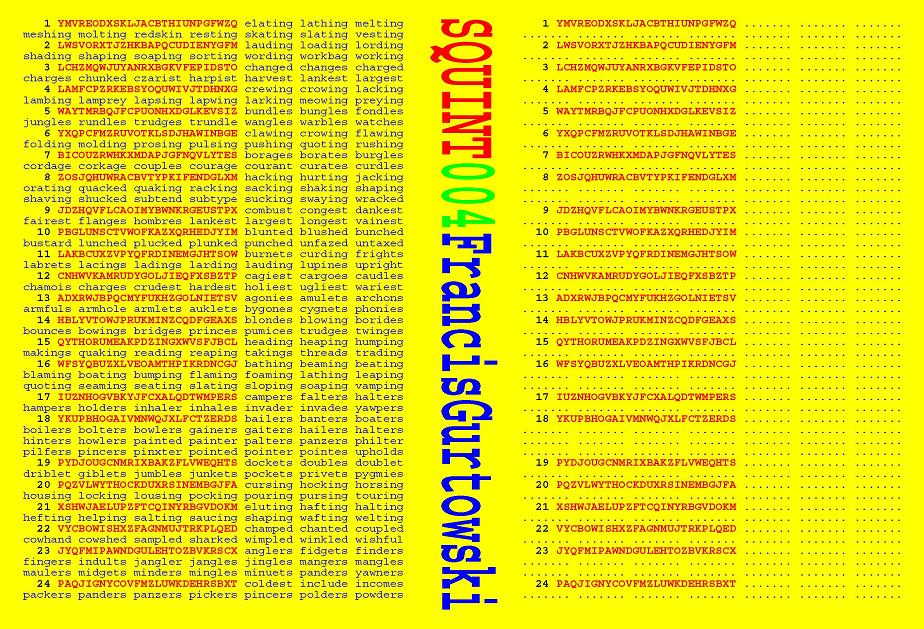
Play squint with the aid of this book series.
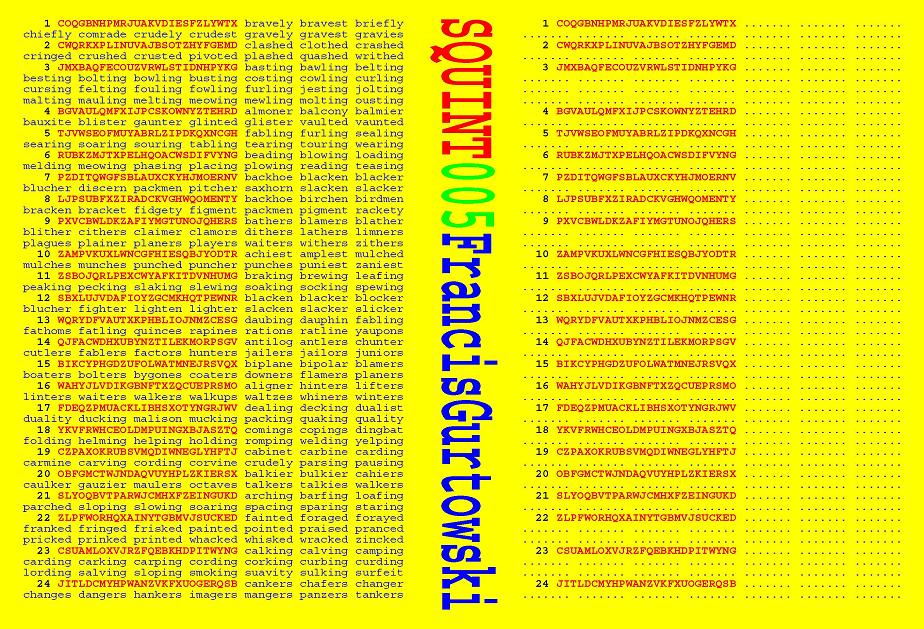
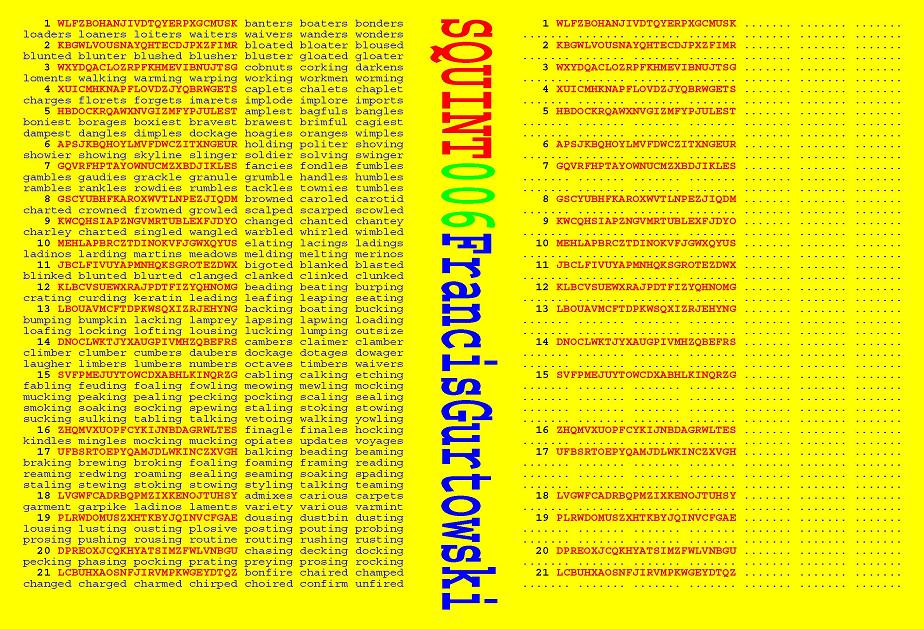
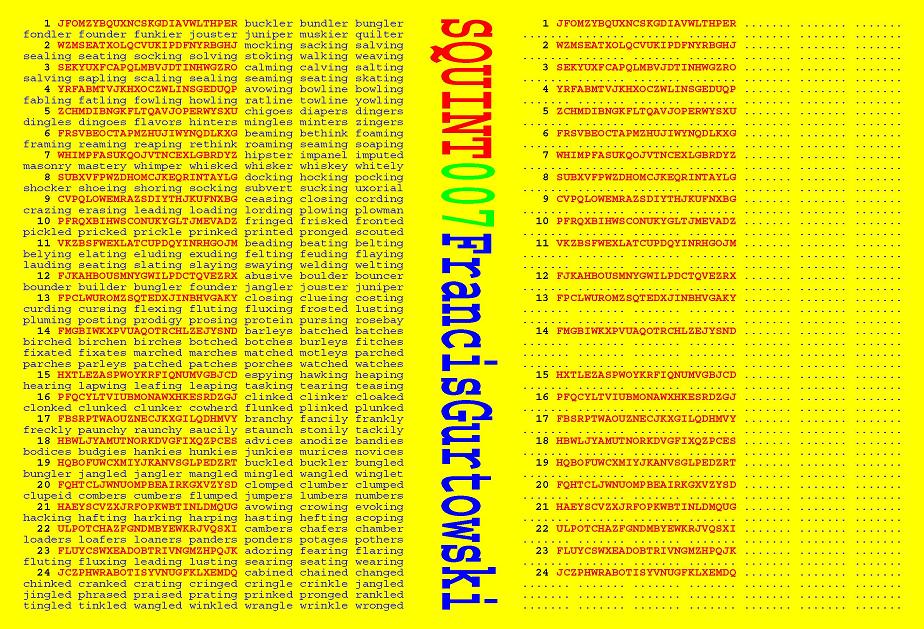
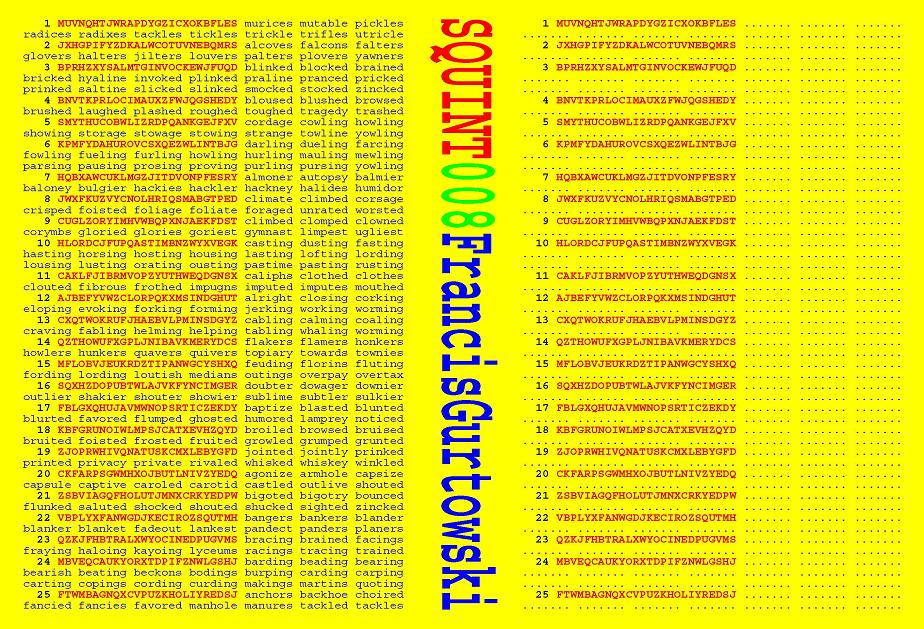
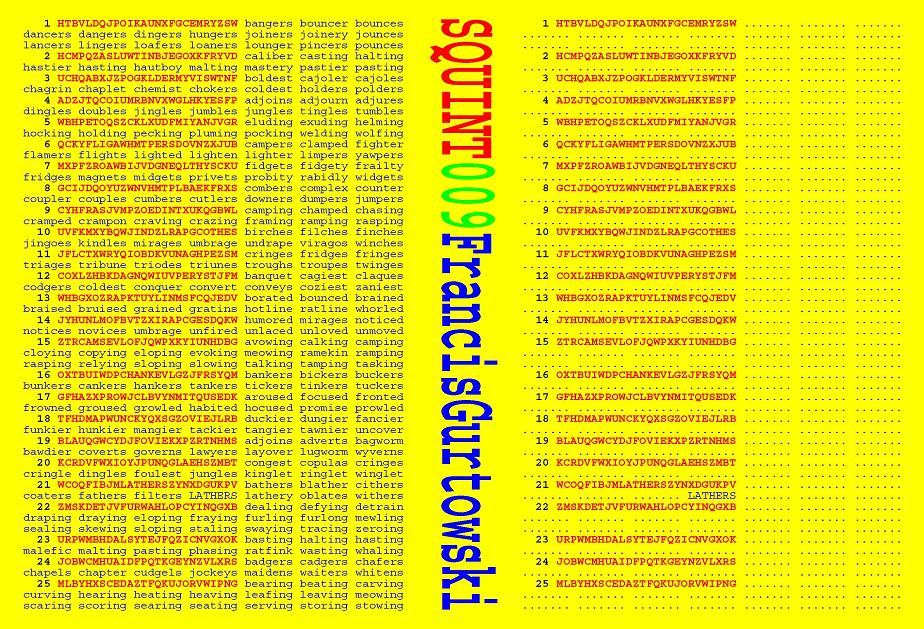
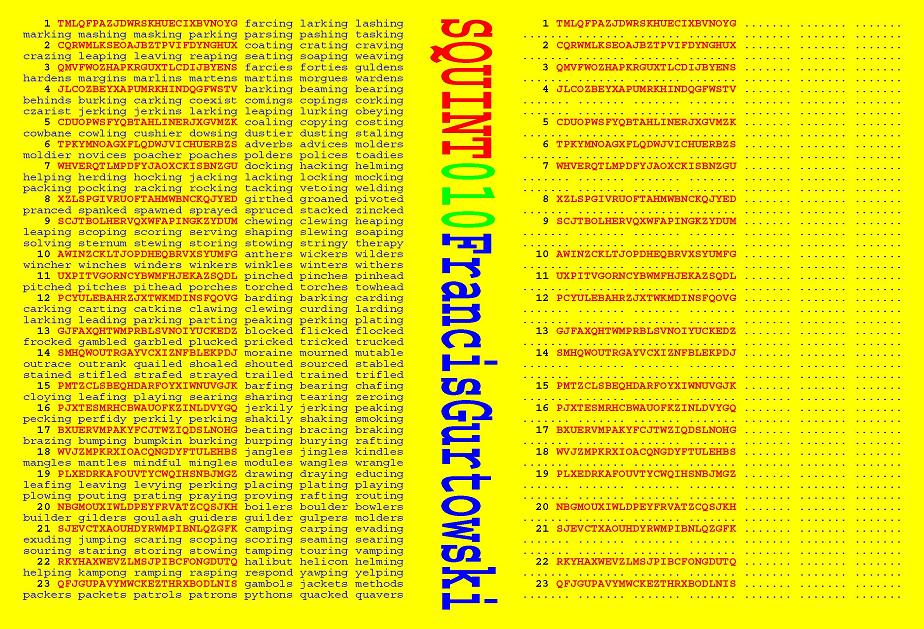
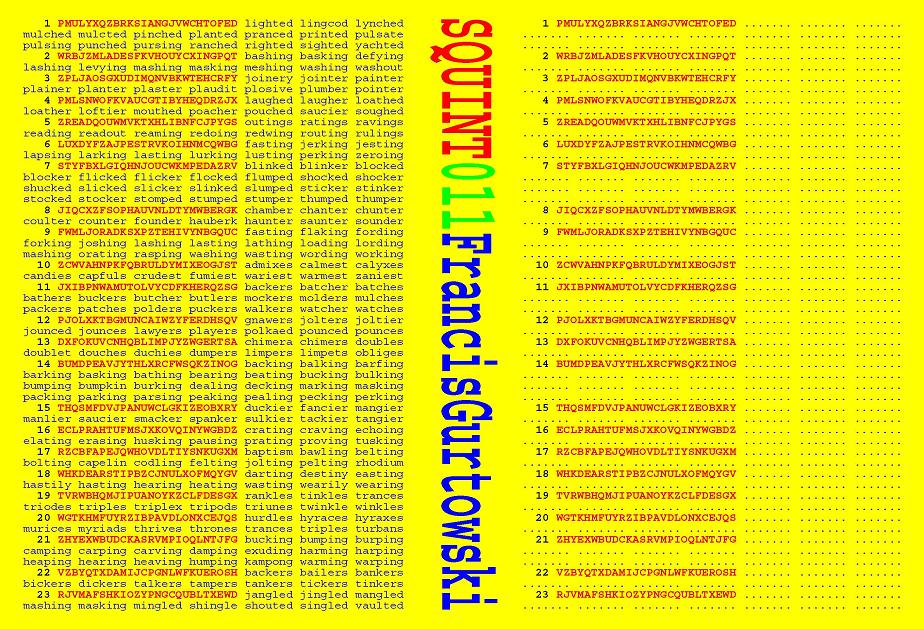
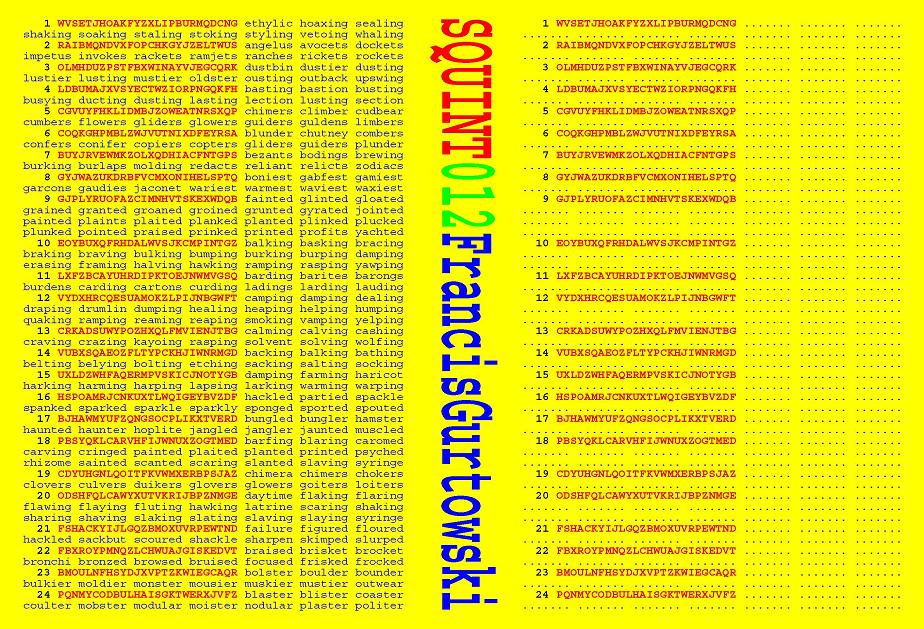
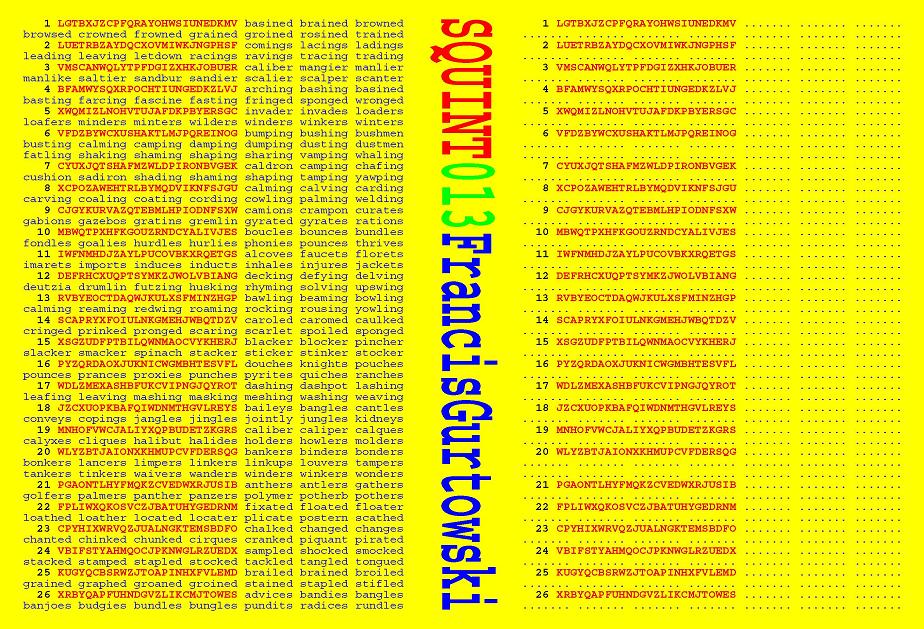
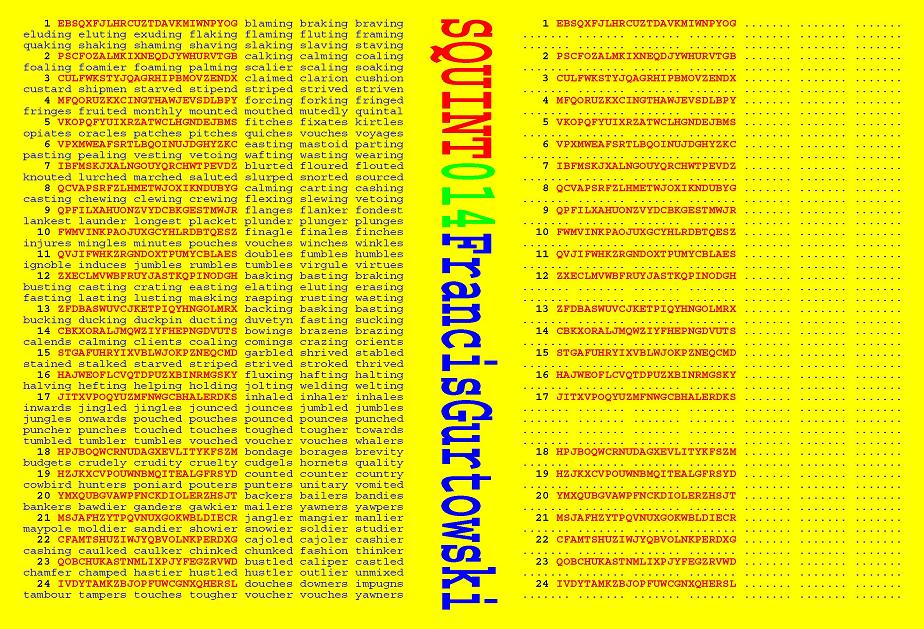
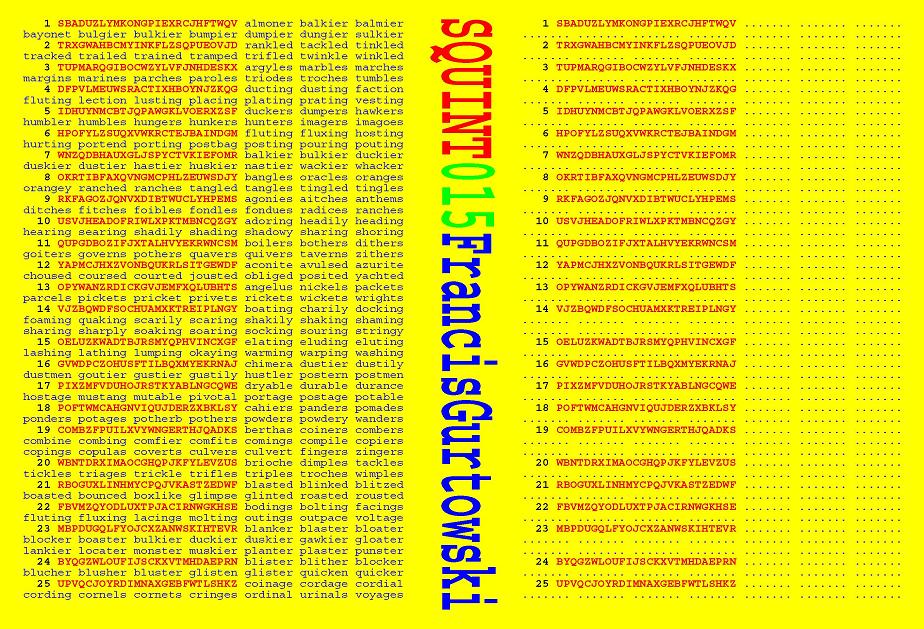
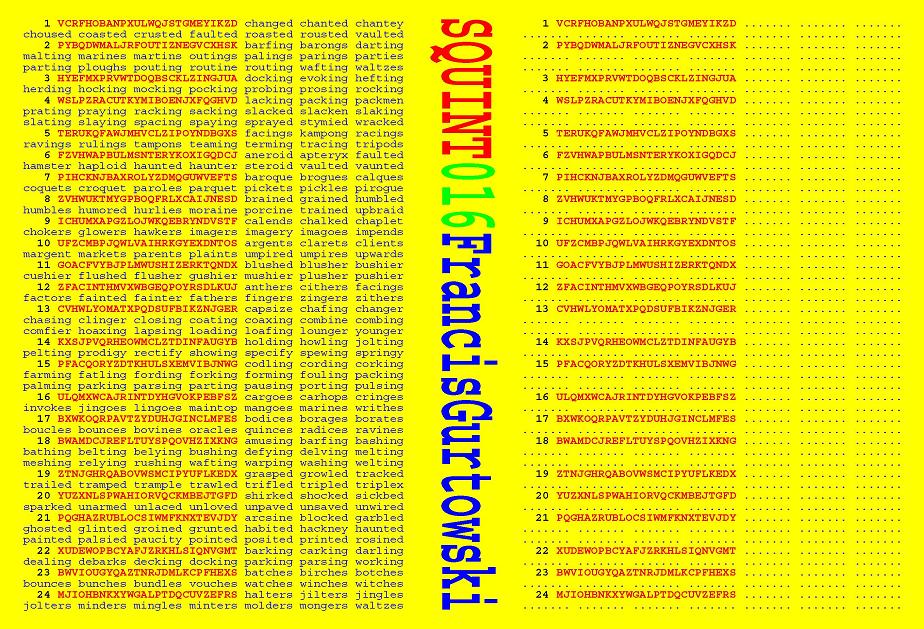
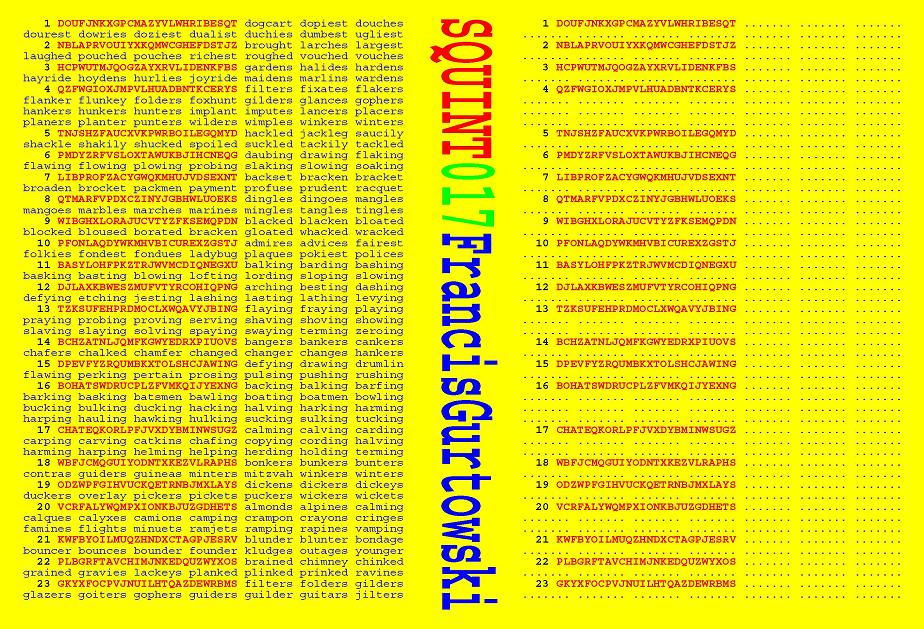
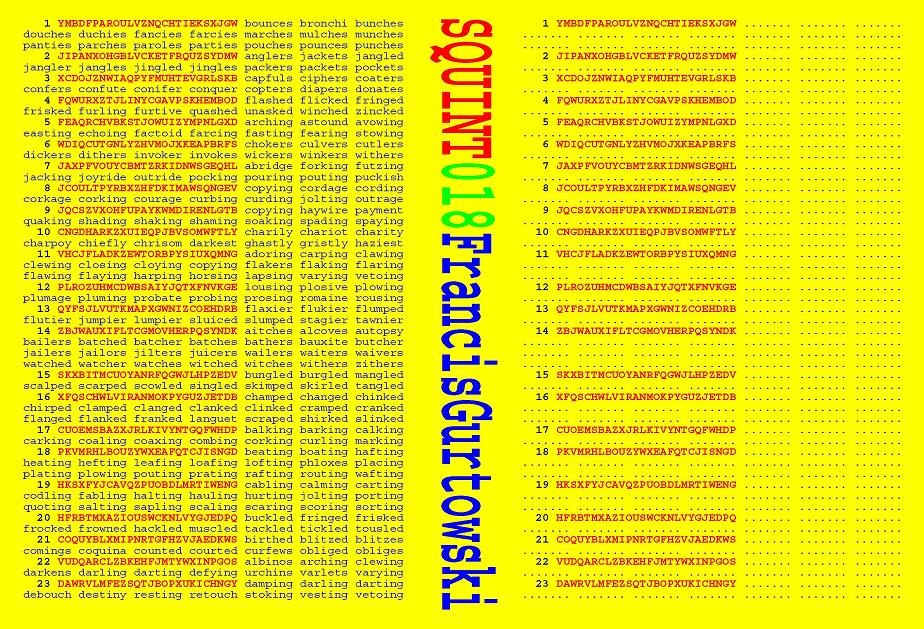
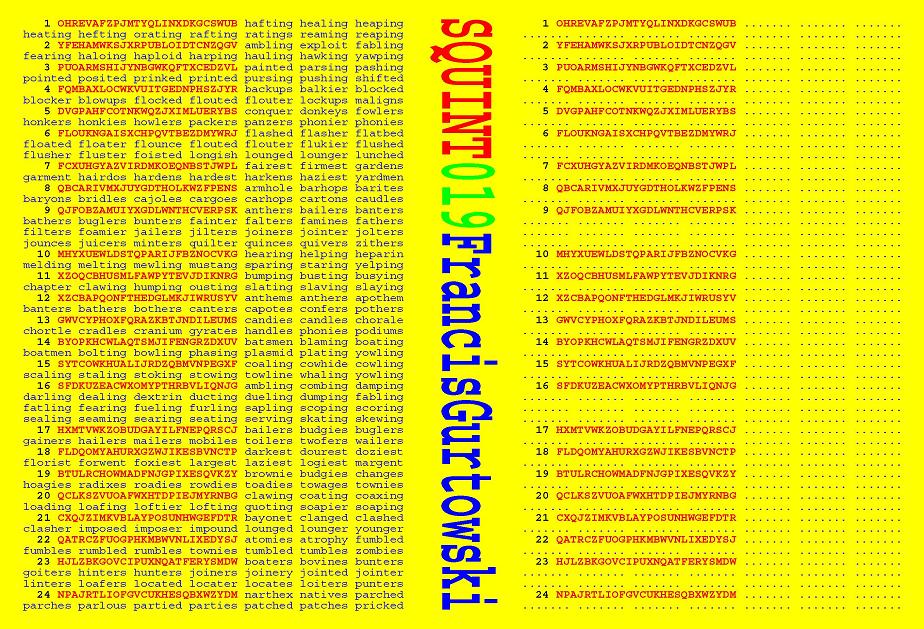
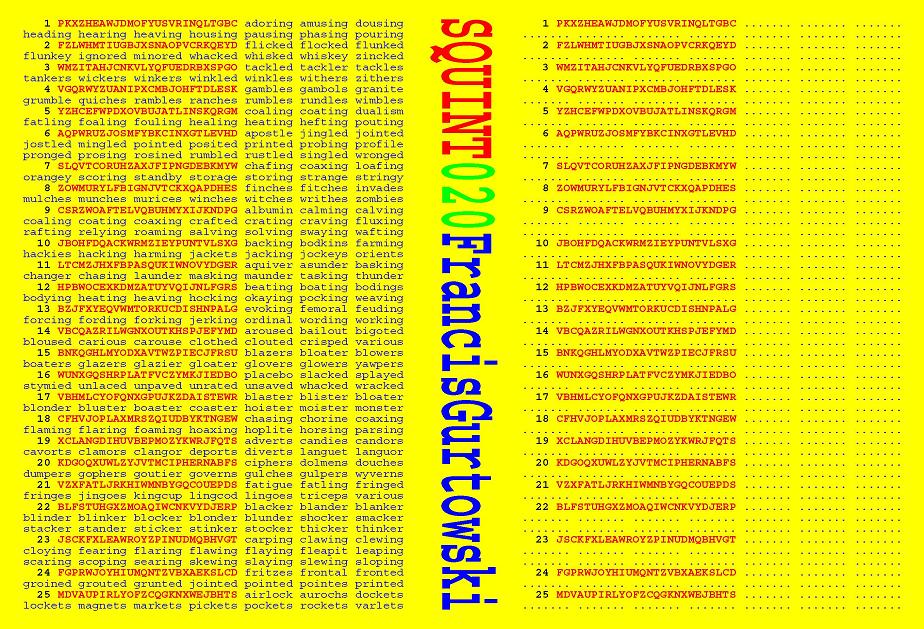
Each volume holds almost five thousand numbered squint-word puzzles
and twice as many solutions.
In the front of each book
the squint-word puzzles are presented
in fill-in-the-blank-slots format.
In the middle of each book
the catchword solutions to the respective squint-word puzzles
are presented in alphabetical catchword order
- for solitaire play.
In the back of each book
the catchword solutions to the respective squint-word puzzles
are presented in high-to-low order
of Scrabble-like catchword ratings
- for competitive play.
Solitaire gameplay ought to be obvious:
fill in the ten (or more) blank slots
provided for the as many seven-letter catchwords
scattered throughout each of the respective permutations.
Competitive gameplay envisions multiple players
taking turns in a round-robin fashion and either
(A) passing their turn or
(B) using their turn to
(1) fill in a blank slot with a different catchword and
(2) jot down their new catchword.
A player wins such a competition
by having contributed the highest-rated catchword.
Ties are broken on the basis of
alphabetical order within Scrabble-like, catchword rating.
|
 |
 |
 |
 |
 |
 |
 |
 |
 |
 |
 |
 |
 |
 |
 |
 |
 |
 |
 |